
BIE provides custom die casting services for precision metal components, supporting projects from tooling development to production manufacturing. Our controlled casting processes enable complex geometries, stable dimensional accuracy, and reliable part quality.
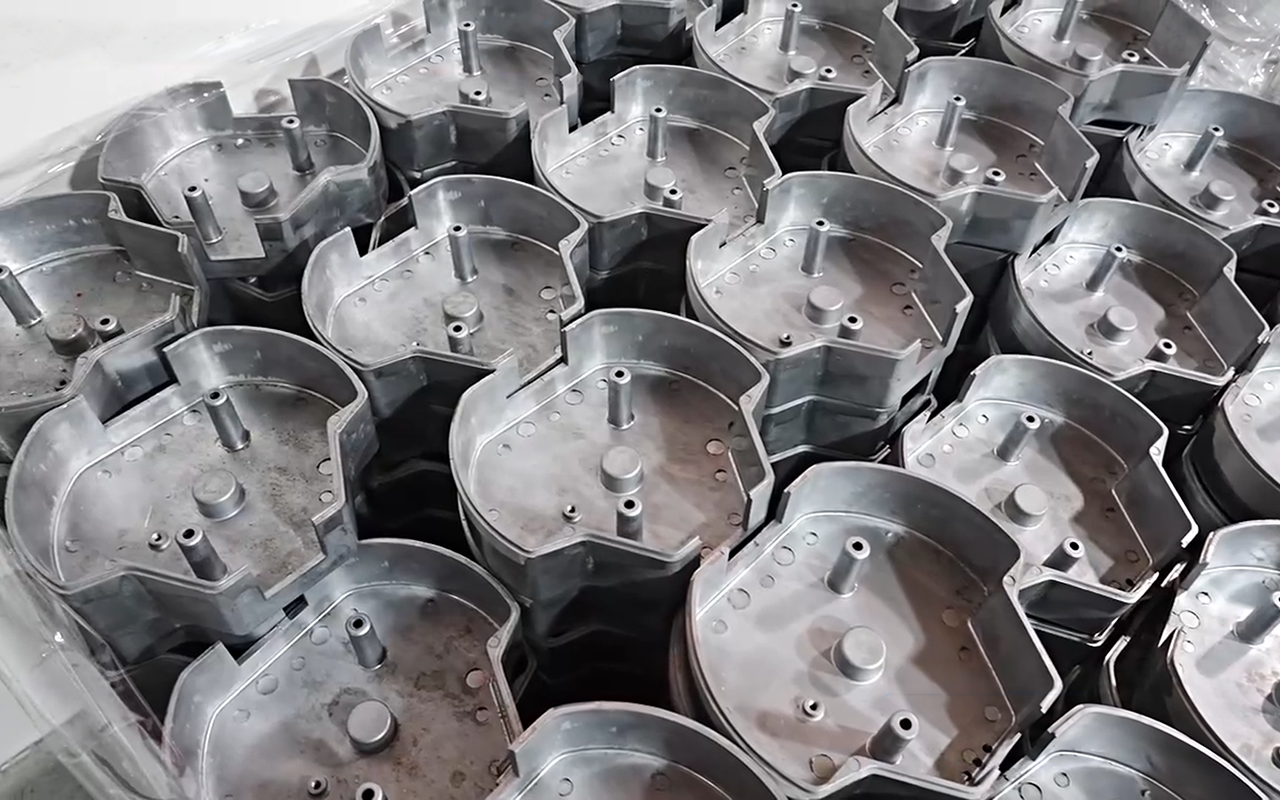

Die casting is a metal manufacturing process in which molten metal is injected into a precision steel mold under high pressure. The metal solidifies rapidly inside the mold cavity, forming parts with accurate dimensions, smooth surfaces, and consistent structural integrity.
This process is well suited for producing components with complex shapes, thin walls, and fine details. Die cast parts are commonly used where dimensional accuracy, surface quality, and mechanical strength are required, making die casting a preferred solution for functional and structural metal components.
Different die casting methods are used depending on alloy type, part structure, and production requirements.


We carefully prepare and strictly inspect the die casting mold based on your custom part specifications, ensuring the mold surface is smooth, structure is intact, and dimensional accuracy meets the required standards to lay a solid foundation for high-quality casting.
High-grade die casting alloys are selected and melted at a precise, controlled temperature, with professional real-time detection to ensure the molten metal has stable performance, uniform composition and no impurities.
The qualified molten metal is injected into the pre-inspected mold at a precise speed and pressure, fully filling the mold cavity. We strictly control all injection parameters to avoid common defects like pores and cracks.
After the molten metal in the mold is fully cooled and solidified, we use professional equipment to eject the cast part gently, ensuring no damage to the part’s surface or internal structure during the process.
The ejected cast part undergoes targeted post-processing, including trimming excess materials, deburring, secondary processing and surface treatment, to optimize the part’s appearance and meet the basic assembly requirements.
We conduct strict final inspection on the post-processed parts, including dimensional measurement, structural detection and performance testing, to ensure each part fully meets your exact project specifications.
Material options are selected based on part geometry, performance needs, and manufacturing feasibility.
Surface finishing improves the appearance, corrosion resistance, and functional performance of die cast parts. Depending on material type and application requirements, different finishing processes can be applied to meet both technical and visual standards.
| Surface Finish | Description |
|---|---|
| As Cast | Parts are delivered directly after casting, with basic cleaning and trimming. Suitable for functional components where appearance is not critical. |
| Shot Blasting | Abrasive media is used to remove surface residues and create a uniform matte texture, improving surface consistency and coating adhesion. |
| Polishing | Enhances surface smoothness and appearance, commonly used for visible or decorative components. |
| Powder Coating | Provides a durable, corrosion-resistant coating with uniform color and thickness, suitable for both functional and aesthetic applications. |
| Painting | Applies a protective or decorative coating to improve corrosion resistance and appearance. |
| Electroplating | Deposits a thin metal layer to enhance corrosion resistance, wear resistance, or surface appearance. |
| Anodizing | Applied mainly to aluminum die cast parts after appropriate surface preparation, improving corrosion resistance and surface hardness. |
| Item | Specification |
|---|---|
| Dimensional Tolerance | Die cast parts typically achieve standard casting tolerances. Critical dimensions can reach up to ±0.01 mm with secondary machining. |
| Minimum Wall Thickness | Thin-wall designs are supported depending on part geometry and alloy selection. Uniform wall thickness is recommended for stable filling. |
| Wall Thickness Ratio | Maintain a balanced wall thickness ratio (≤ 1:3) to ensure proper metal flow and reduce internal stress. |
| Hole Features | Small holes and threaded features are usually completed through secondary machining to ensure accuracy and strength. |
| Draft Angle | A minimum draft angle of 0.5° is recommended to ensure smooth part ejection and mold longevity. |
| Mold Life | Up to 100,000 cycles (material and design dependent) |
| Moq | 1000pcs |
We are committed to providing high-quality die casting services, with customized solutions, strict precision control, thoughtful follow-up and reliable global delivery to meet all your project needs.

Customized die casting services tailored to your unique project needs, which can flexibly adapt to different part sizes, complex shapes and various functional requirements, providing exclusive and precise matching for your specific industrial or product projects.

Professional precision management throughout the entire die casting process, focusing on strict control of dimensional accuracy and structural uniformity, to ensure that each cast part fully meets the strict precision standards required by industrial production and your project.

We provide dedicated one-on-one project follow-up service, with timely and efficient communication throughout the whole process, and quick response to all your queries, design adjustments and other related needs to ensure smooth progress of your project.

We have reliable international logistics cooperation resources, with careful and protective packaging for each batch of products and real-time logistics tracking service, guaranteeing on-time and safe delivery of your die-cast parts to any destination worldwide.
Copyright © Dongguan BIE Hardware Co., Ltd - Privacy policy


