Home > Products > More > Aluminum Extrusion
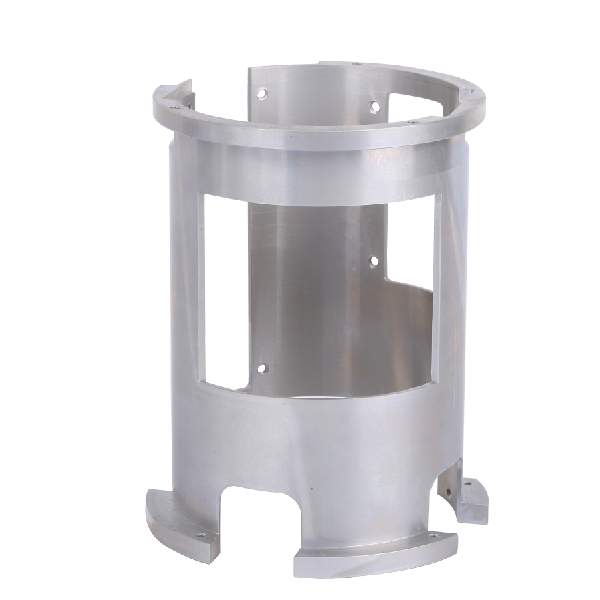
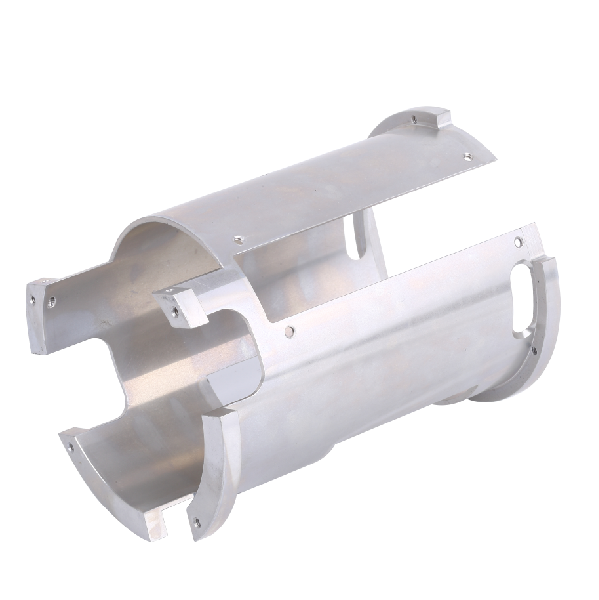
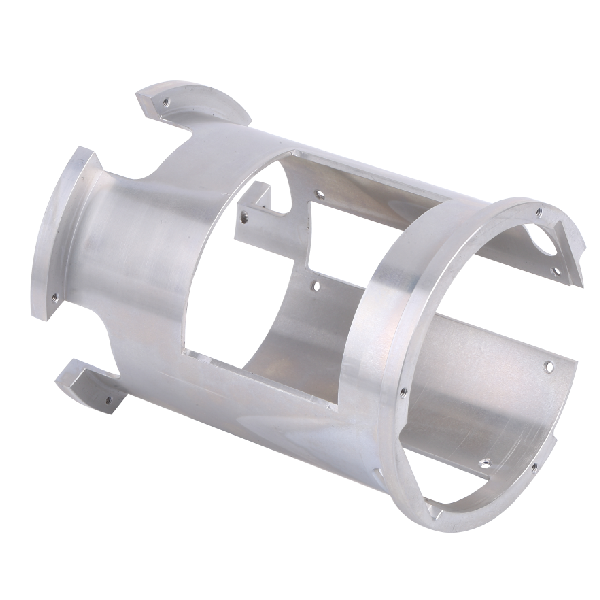
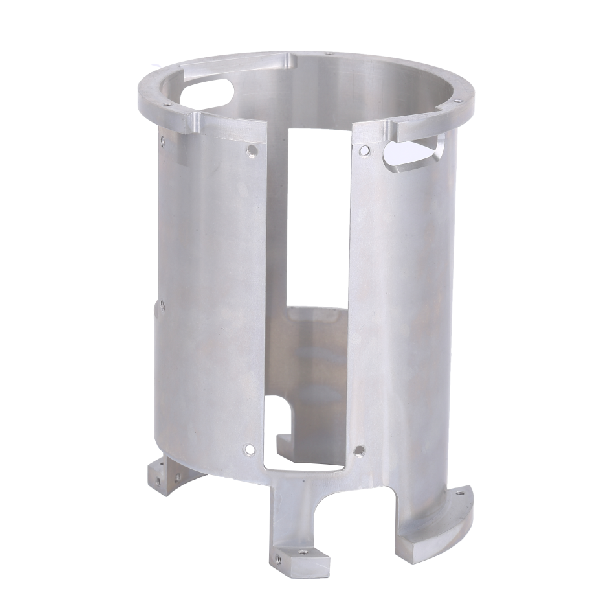
This custom cylindrical housing is manufactured from 6061 aluminum extrusion with secondary CNC machining. The component features large side openings, curved mounting flanges, and multiple precision-machined holes. Combining extrusion with CNC milling and drilling allows the basic profile to be formed before the detailed openings and mounting features are machined. The finished housing has an as-machined surface and a specified tolerance of ±0.1 mm.
This custom aluminum housing combines an extruded cylindrical profile with CNC-machined structural features. Manufactured from 6061 aluminum, the component includes large rectangular and irregular side openings, curved end flanges, and multiple mounting holes distributed around the housing.
Aluminum extrusion provides the initial profile, while secondary CNC operations create the openings, mounting interfaces, and localized features required by the part design.
The relatively thin cylindrical walls and large cutout areas introduce additional considerations for workholding, machining sequence, and dimensional stability. The finished component retains an as-machined aluminum surface, with dimensional requirements specified at ±0.1 mm.
| Specification | Details |
| Product Type | Custom Aluminum Cylindrical Housing |
| Material | Aluminum 6061 |
| Manufacturing Process | Aluminum Extrusion + CNC Machining |
| Secondary Operations | CNC Milling, Drilling, and Cutout Machining |
| Surface Finish | As Machined |
| Tolerance | ±0.1 mm |
| Key Features | Cylindrical Profile, Large Side Openings, Curved Mounting Flanges, Multiple Mounting Holes |
| Production Type | Custom Manufacturing |
The housing begins with a 6061 aluminum extrusion, providing the basic cylindrical geometry before secondary machining. Using an extruded profile can reduce the amount of material removal compared with machining the complete housing from solid stock, depending on the starting profile and production requirements.
Multiple large openings are machined through the cylindrical wall. These include rectangular windows and irregular cutouts that interrupt the continuous wall structure. Their size and distribution require careful consideration of part support during machining.
The component incorporates curved flange sections and mounting tabs at its ends. These features include holes for mechanical fastening and require accurate positioning relative to the cylindrical body.
Small mounting holes are distributed across the cylindrical wall and flange areas. Their locations and alignment are important for subsequent assembly according to the approved part drawing.
The finished housing has an as-machined surface without an additional surface treatment. Visible machining marks may remain on processed areas, depending on the machining operation and surface finish requirements.
The manufacturing process begins with a 6061 aluminum extrusion that provides the initial cylindrical profile. The extruded material serves as the starting blank for subsequent machining operations.
The profile geometry and material allowance must be considered when preparing the blank for CNC machining.
The extruded profile is prepared to the required working length before detailed machining. Blank preparation establishes the starting geometry for the remaining operations.
CNC milling is used to create the large windows and irregular openings along the cylindrical wall. These operations remove selected sections of the extruded profile to produce the required housing geometry.
Machining sequence and workholding are important because removing large wall sections reduces the stiffness of the remaining structure.
The curved flange sections, mounting interfaces, and localized structural features are machined according to the part drawing. The process must account for the relationship between the cylindrical profile and the mounting geometry.
Multiple holes are machined in the housing walls and mounting areas. Hole positions are controlled relative to the established machining references to support the specified assembly requirements.
After machining, burrs and sharp edges are removed as required. The finished component is inspected against the approved drawing, including the specified ±0.1 mm dimensional tolerance and relevant feature locations.
The housing is supplied with an as-machined surface finish.
Unlike rectangular stock, a cylindrical extrusion requires suitable workholding to prevent movement and deformation during machining.
For this housing, the large side openings further reduce the available clamping area. Fixture design and clamping force must therefore be considered to avoid distorting the component.
Machining large cutouts into the cylindrical wall changes the stiffness of the housing as material is removed.
The machining sequence should account for the remaining wall structure, particularly where narrow sections connect the upper and lower portions of the component.
Mounting holes and flange features are distributed around the curved housing. Their relative positions must be controlled using appropriate machining references and setups.
Consistent alignment is particularly important when features on different sides of the housing are intended to work together during assembly.
The specified tolerance for this component is ±0.1 mm. Dimensional inspection should focus on the drawing-defined features, including opening geometry, mounting hole locations, and relevant interfaces.
Because the component combines an extruded profile with extensive secondary machining, both the initial profile condition and machining-induced deformation must be considered when evaluating dimensional accuracy.
Using aluminum extrusion as the starting material offers an alternative to producing the entire geometry from solid stock.
The manufacturing benefit depends on the extrusion profile, machining allowance, tooling requirements, production quantity, and finished geometry. Reviewing these factors together helps determine whether extrusion combined with CNC machining is appropriate for a specific project.
BIE provides custom CNC machining services for aluminum extrusion components, including cylindrical housings, structural profiles, mounting features, and parts requiring extensive secondary machining.
Our manufacturing support includes drawing review, machining process planning, milling, drilling, deburring, and dimensional inspection according to project requirements.
For OEM projects involving aluminum extrusion and CNC machining, we review the starting profile, part geometry, critical dimensions, and production quantities to develop a suitable manufacturing approach.
Need CNC machining for custom aluminum extrusions?
Send BIE your 2D drawings, 3D CAD files, material specifications, and expected order quantities for a manufacturing review and quotation.
Copyright © Dongguan BIE Hardware Co., Ltd - Privacy policy